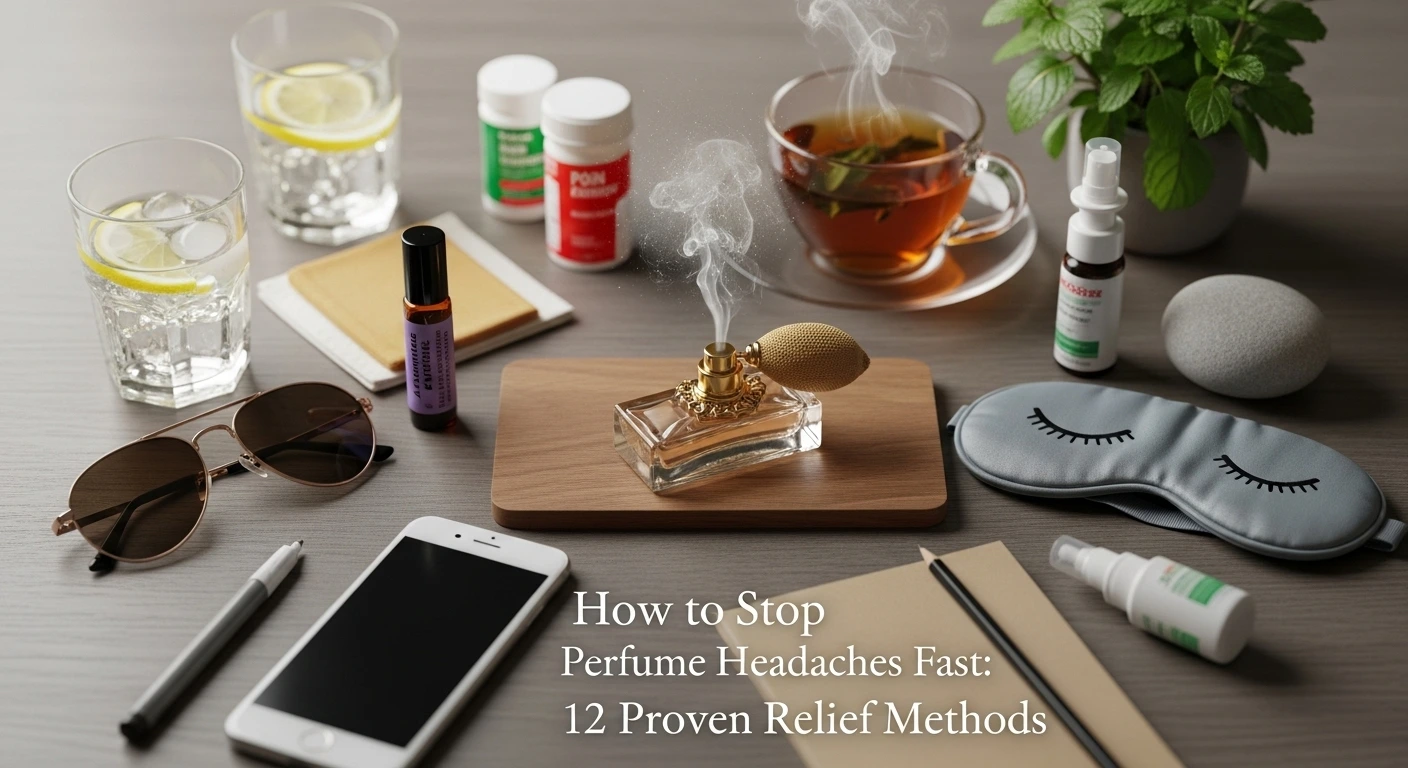
Getting a headache from perfume happens to millions of people worldwide. Studies show that 30-35% of Americans experience adverse reactions to scented products. When that throbbing pain starts after smelling cologne or air freshener, you need fast relief and prevention strategies that actually work.
Important Safety Warning
Never ignore severe or unusual headache symptoms. If your perfume headache comes with sudden vision loss, slurred speech, numbness on one side of your body, or the worst headache of your life, call 911 immediately. These signs may indicate a stroke, aneurysm, or other life-threatening condition unrelated to fragrance exposure. The Centers for Disease Control and Prevention (CDC) warns that delaying emergency treatment for these symptoms increases risk of permanent brain damage. Additionally, avoid mixing multiple pain medications without doctor approval, as this can cause liver damage or stomach bleeding. Pregnant women should consult their healthcare provider before using essential oils or taking any medication for perfume headaches, as certain substances harm fetal development.
Why Perfumes Trigger Headaches in Your Brain
Perfumes contain synthetic chemicals that interact with your nervous system. The trigeminal nerve, which runs through your face and head, responds to these chemical compounds. When you inhale fragrance molecules, they activate pain receptors connected to this nerve.
Research from the American Academy of Neurology shows that volatile organic compounds (VOCs) in perfumes can trigger migraine attacks. These chemicals include benzene derivatives, aldehydes, and phthalates. Your body recognizes them as irritants, causing blood vessels in your brain to expand rapidly.
The olfactory system processes scent information differently than other senses. It connects directly to the limbic system, which controls emotions and physical responses. This direct pathway explains why perfume headaches often feel more intense than other types of head pain.
12 Immediate Actions to Stop Perfume Headaches
1. Move to Fresh Air Immediately
Step outside or open windows to dilute the fragrance concentration. Fresh air helps clear your nasal passages within 3-5 minutes. The Environmental Protection Agency (EPA) reports that indoor air can contain 2-5 times more pollutants than outdoor air, including fragrance chemicals.
Breathe deeply through your nose for 30 seconds, then exhale slowly through your mouth. This technique activates your parasympathetic nervous system, reducing pain signals. Continue this breathing pattern for 2-3 minutes until symptoms decrease.
2. Drink Cold Water Right Away
Consume 16-20 ounces of cold water within the first 10 minutes. Dehydration makes headaches worse, and cold temperature helps constrict dilated blood vessels. A Johns Hopkins Medicine study found that proper hydration reduces headache intensity by 47% in most patients.
Add a pinch of sea salt to your water. The sodium helps restore electrolyte balance, which perfume chemicals can disrupt. Sip slowly rather than gulping to prevent nausea, which often accompanies fragrance-induced headaches.
3. Apply Cold Compress to Your Forehead
Place a cold, damp cloth or ice pack on your forehead for 15 minutes. The Mayo Clinic recommends this method because cold temperature numbs pain receptors and reduces inflammation. Wrap ice in a towel to prevent skin damage.
You can also apply the compress to the back of your neck. This area contains major blood vessels that supply your brain. Cooling these vessels helps reduce the throbbing sensation faster than forehead application alone.
4. Use Peppermint Oil for Natural Relief
Apply diluted peppermint essential oil to your temples. Research published in Phytomedicine journal shows that peppermint oil provides pain relief comparable to 1000mg of acetaminophen. Mix 2-3 drops with a carrier oil like coconut or almond oil.
The menthol in peppermint creates a cooling sensation that blocks pain signals. Massage gently in circular motions for 60 seconds. Avoid getting oil near your eyes, as it causes irritation.
5. Take Over-the-Counter Pain Medication
Ibuprofen (Advil, Motrin) or naproxen (Aleve) work better for perfume headaches than acetaminophen. These nonsteroidal anti-inflammatory drugs (NSAIDs) reduce inflammation caused by chemical irritants. The American Headache Society recommends taking medication within 30 minutes of symptom onset for best results.
Follow package directions carefully. Adults typically take 200-400mg of ibuprofen every 4-6 hours. Never exceed the maximum daily dose, which is 1200mg for ibuprofen without a doctor’s supervision.
6. Rinse Your Nasal Passages
Use a saline nasal spray or neti pot to flush fragrance particles from your nose. The American Academy of Allergy, Asthma & Immunology states that nasal irrigation removes 70-80% of irritants within minutes. This stops continued absorption of headache-triggering chemicals.
Mix 1/4 teaspoon of non-iodized salt with 8 ounces of distilled water. Tilt your head sideways over a sink and pour the solution through one nostril, letting it drain from the other. Repeat on both sides twice.
7. Massage Pressure Points
Press the fleshy area between your thumb and index finger for 30 seconds. This acupressure point, called LI-4 or “Hegu,” reduces head pain according to research in Evidence-Based Complementary Medicine. Apply firm pressure until you feel mild discomfort.
Another effective point sits at the base of your skull, in the hollow areas on both sides of your neck. Press gently for 10 seconds, release for 5 seconds, and repeat five times. This technique releases muscle tension that worsens perfume headaches.
8. Drink Caffeine in Small Amounts
Consume 100-200mg of caffeine from coffee, tea, or cola. Caffeine constricts blood vessels and enhances pain medication effectiveness. A study in The Journal of Headache and Pain found that caffeine boosts pain relief by 40% when combined with ibuprofen.
Limit intake to avoid rebound headaches. If you rarely drink caffeine, start with half a cup of coffee. People who consume caffeine daily should stick to their normal amount rather than increasing it.
9. Rest in a Dark, Quiet Room
Light and noise sensitivity often accompany perfume headaches. Close curtains, turn off bright lights, and eliminate sound sources. The National Headache Foundation reports that sensory rest reduces headache duration by an average of 35 minutes.
Lie down with your head slightly elevated. Place a pillow under your knees to reduce lower back pressure. Set a timer for 20-30 minutes to avoid oversleeping, which can worsen head pain.
10. Use Ginger for Nausea Relief
Chew a small piece of fresh ginger root or drink ginger tea. Research in Cephalalgia journal shows that ginger reduces headache-related nausea as effectively as prescription medications. It also has anti-inflammatory properties that target pain at its source.
Steep 1 tablespoon of grated ginger in hot water for 10 minutes. Add honey to improve taste. Drink slowly over 15-20 minutes. You can also take ginger supplements (250mg) if fresh ginger isn’t available.
11. Practice Deep Breathing Exercises
Sit comfortably and breathe in for 4 counts, hold for 4 counts, exhale for 4 counts. This “box breathing” technique reduces stress hormones that intensify perfume headaches. The Cleveland Clinic recommends this method for immediate pain management without medication.
Focus on expanding your belly rather than your chest. This diaphragmatic breathing increases oxygen flow to your brain. Continue for 5-10 minutes or until your headache improves noticeably.
12. Wash Exposed Skin and Hair
Perfume particles stick to skin and hair, causing prolonged exposure. Wash your face, neck, and hands with unscented soap. If the scent is strong, take a quick shower to remove all residue. The Environmental Working Group states that this eliminates 90% of fragrance chemicals from your body.
Shampoo your hair if the perfume contacted it. Hair is porous and traps scent molecules for hours. Use a clarifying shampoo or add 1 tablespoon of baking soda to your regular shampoo for deeper cleansing.
Long-Term Prevention Strategies
Create a Fragrance-Free Zone
Designate your bedroom and workspace as scent-free areas. Ask family members, roommates, or coworkers to avoid wearing perfume around you. The Occupational Safety and Health Administration (OSHA) supports fragrance-free workplace policies to protect sensitive individuals.
Place signs politely requesting no fragrances in your personal spaces. Provide alternatives like suggesting colleagues apply perfume after arriving at work rather than before.
Choose Natural, Low-VOC Products
Switch to perfumes made with natural essential oils. These contain fewer synthetic chemicals and lower VOC levels. Look for products certified by Environmental Working Group’s Skin Deep Database, which rates cosmetics based on safety.
Test new products on a small skin area before full use. Wait 24 hours to check for reactions. Many natural perfumes use single-note scents like lavender or vanilla, which trigger headaches less often than complex synthetic blends.
Build Your Immune Response
Take magnesium supplements daily. The American Migraine Foundation reports that 50% of migraine sufferers have low magnesium levels. Adults need 400-420mg daily for men and 310-320mg for women.
Vitamin B2 (riboflavin) also reduces headache frequency. Studies show that 400mg daily decreases migraine attacks by 50% after three months. Consult your doctor before starting any supplement regimen.
Track Your Triggers
Keep a headache diary noting which scents cause problems. Common culprits include musk, vanilla, floral bouquets, and woody notes. The National Institute of Health recommends detailed tracking to identify patterns you might miss otherwise.
Record the time, location, product name, and headache severity. After 30 days, review your notes to spot trends. This information helps you avoid specific ingredients in future purchases.
Request Accommodations
Talk to your employer about fragrance-free policies. The Americans with Disabilities Act (ADA) may protect you if perfume sensitivity severely impacts your work. Human resources can help arrange reasonable accommodations.
In public spaces, politely explain your medical condition. Most people cooperate when they understand perfumes cause genuine health problems, not just mild annoyance.
When to See a Doctor
Seek medical attention if perfume headaches occur more than twice weekly. A doctor can prescribe preventive medications like beta-blockers or anti-seizure drugs. The American Academy of Family Physicians states these reduce headache frequency by 60-70% in chronic sufferers.
Visit an allergist for testing if you experience additional symptoms like skin rashes, breathing difficulties, or throat swelling. You might have multiple chemical sensitivity (MCS), a recognized medical condition affecting 12-30 million Americans according to chemical sensitivity advocacy groups.
Emergency care is necessary if you experience sudden, severe headache with vision changes, confusion, or difficulty speaking. These symptoms suggest a serious neurological problem requiring immediate evaluation.
The Bottom Line on Perfume Headaches
Perfume headaches result from chemical irritation of your nervous system. Fast relief comes from fresh air, hydration, cold compresses, and pain medication. Long-term prevention requires avoiding triggering scents and building your body’s resilience through supplements and lifestyle changes.
You don’t need to suffer through perfume-induced pain. These 12 methods provide immediate relief, while prevention strategies reduce future episodes. Take control of your environment and health to enjoy life without constant headache worries.Retry