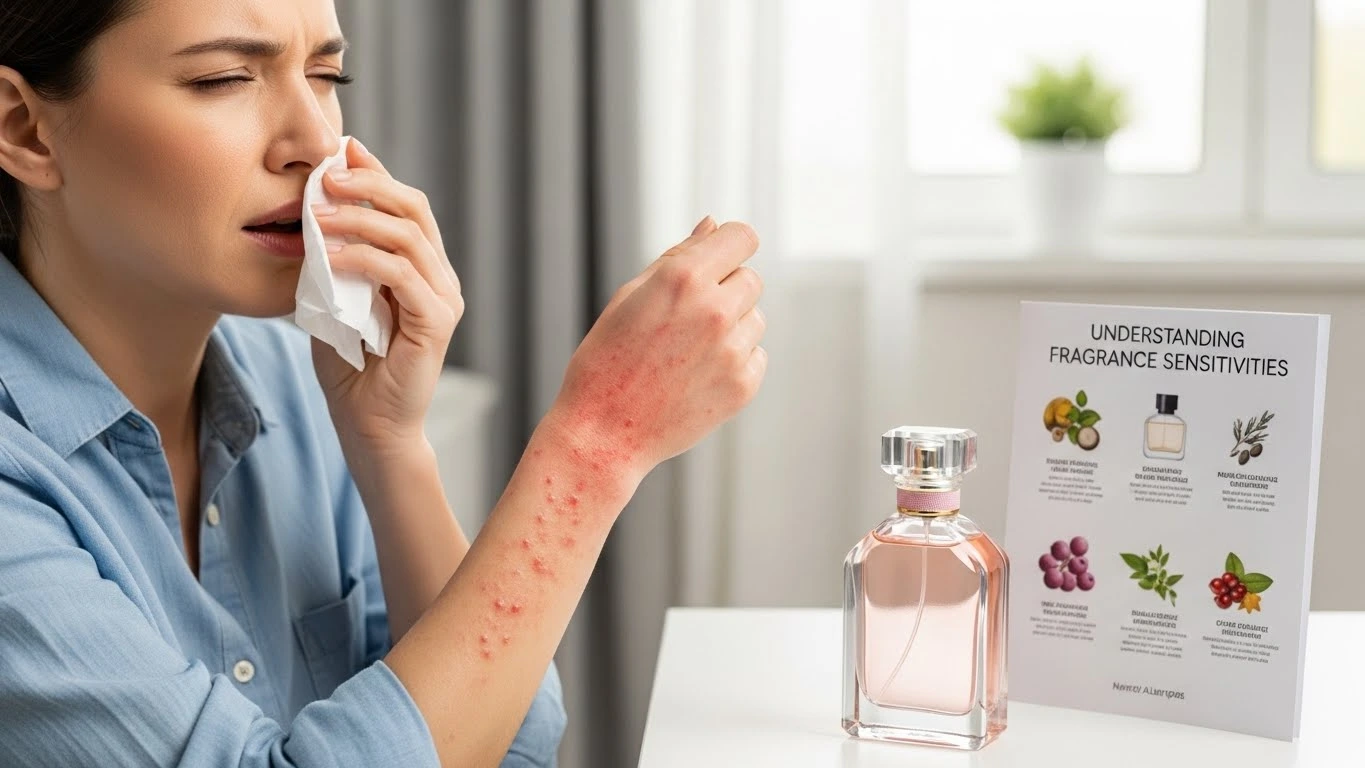
Fragrance allergies affect nearly 32% of Americans according to a 2019 study published in the Journal of Environmental Health. Your skin breaks out in red patches after trying a new cologne, or you develop a pounding headache when someone walks by wearing strong perfume. These reactions signal that your body identifies certain scent molecules as threats, triggering uncomfortable symptoms that range from mild itching to severe respiratory distress.
What Are Perfume Allergies?
Perfume allergies occur when your immune system mistakes fragrance ingredients for harmful invaders. Your body releases histamines and other chemicals to fight these perceived threats, creating visible and invisible reactions.
The American Academy of Dermatology reports that fragrances rank among the top five allergens causing skin problems. Unlike food allergies that trigger immediate responses, perfume allergies can develop slowly over time. You might use the same scent for months before suddenly experiencing symptoms.
Main Ingredients That Trigger Allergic Reactions
Synthetic Chemicals in Modern Fragrances
Most commercial perfumes contain 50 to 300 different chemical compounds. The International Fragrance Association lists over 3,000 materials used in fragrance production. Your body might react to any of these substances.
Phthalates help scents last longer on your skin. Studies from the Environmental Working Group show these chemicals appear in 75% of personal care products. Research links phthalates to hormone disruption and allergic responses in sensitive people.
Parabens act as preservatives in perfumes and colognes. A 2016 study in the Journal of Applied Toxicology found parabens in 85% of tested fragrance products. These compounds can cause contact dermatitis in approximately 1-3% of users.
Synthetic musks create deep, long-lasting base notes. The European Commission on Health and Food Safety identifies five types of synthetic musks commonly used in perfumes. These chemicals accumulate in body tissues and trigger immune responses in allergic individuals.
Natural Ingredients That Cause Problems
Plant-based perfume ingredients also provoke allergic reactions. Essential oils contain concentrated plant compounds that irritate sensitive skin and respiratory systems.
Limonene comes from citrus peels and appears in 65% of fragranced products according to Contact Dermatitis journal research. This terpene oxidizes when exposed to air, forming allergenic compounds that affect 2-3% of the population.
Linalool provides floral notes in lavender and rose-based perfumes. The European Union requires labeling when linalool exceeds 0.001% in leave-on products. Studies show 7% of dermatitis patients test positive for linalool sensitivity.
Eugenol creates spicy, warm scents found in clove and cinnamon fragrances. Clinical data from the North American Contact Dermatitis Group reveals eugenol causes reactions in 3-5% of tested individuals.
How Your Body Reacts to Fragrance Chemicals
Skin Reactions
Contact dermatitis represents the most common perfume allergy symptom. Your skin develops this condition through two mechanisms.
Irritant contact dermatitis happens when fragrance chemicals damage your skin’s protective barrier directly. You notice redness, dryness, and burning within hours of perfume application. The American Contact Dermatitis Society reports this accounts for 80% of fragrance-related skin problems.
Allergic contact dermatitis involves your immune system creating antibodies against specific fragrance molecules. Symptoms appear 12-72 hours after exposure. Red, itchy patches spread beyond the application area. This reaction worsens with repeated contact.
Respiratory Symptoms
Breathing perfume particles triggers asthma-like symptoms in sensitive people. The American College of Allergy, Asthma, and Immunology states that 72% of asthma patients report fragrance sensitivity.
Your airways tighten when exposed to volatile organic compounds in perfumes. You experience wheezing, chest tightness, and difficulty breathing. Strong scents in enclosed spaces like elevators or offices make symptoms worse.
Neurological Effects
Perfume chemicals affect your nervous system, causing headaches and dizziness. A 2018 study in Environmental Health Perspectives found that 20% of adults experience headaches from fragrance exposure.
These symptoms occur because fragrance molecules cross your blood-brain barrier. Your trigeminal nerve, responsible for facial sensation, becomes irritated by airborne perfume particles.
Why Some People Develop Perfume Allergies
Genetic Factors
Your genes influence how your body processes chemicals. The Human Leukocyte Antigen (HLA) system determines immune responses to foreign substances. Certain HLA variants increase your risk of developing fragrance allergies.
Research from the National Institutes of Health shows people with family histories of allergies face 50% higher chances of fragrance sensitivity. If your parents have eczema or asthma, you carry greater susceptibility to perfume reactions.
Repeated Exposure
The sensitization process requires multiple contacts with allergens. Your first perfume exposure rarely causes problems. Your immune system needs time to recognize and memorize the chemical structure.
With each subsequent exposure, your body mounts stronger reactions. This explains why your favorite perfume suddenly causes problems after years of safe use. The threshold varies between individuals—some people tolerate hundreds of exposures while others react after just a few.
Existing Health Conditions
People with asthma, eczema, or hay fever show increased perfume sensitivity. The Asthma and Allergy Foundation of America reports that 95% of asthma patients experience symptoms from fragranced products.
Your compromised skin barrier in eczema allows deeper penetration of fragrance chemicals. This creates higher allergen loads in your body, increasing reaction severity.
Common Perfume Products That Cause Allergies
Personal Care Items
Fragrances hide in everyday products beyond perfume bottles. The Environmental Working Group’s Skin Deep database reveals fragrance chemicals in 3,163 personal care products.
Shampoos and conditioners contain fragrance concentrations between 0.5-2%. You absorb these chemicals through your scalp’s thin skin. A 2017 study in Contact Dermatitis linked hair care fragrances to 15% of scalp dermatitis cases.
Body lotions and creams combine fragrances with moisturizers that help chemicals penetrate deeper into your skin layers. This increases allergic reaction risks by 40% compared to perfume-only exposure.
Deodorants and antiperspirants apply fragrance to sensitive underarm skin. The warm, moist environment enhances chemical absorption. Research shows 12% of deodorant users experience allergic reactions.
Household Products
Cleaning supplies, laundry detergents, and air fresheners release fragrance chemicals into your home environment. The California Air Resources Board found that scented products emit over 100 volatile organic compounds.
Laundry detergents leave fragrance residues on clothing that contact your skin for hours. Studies show these residues maintain 80% of their original concentration after washing and drying.
Air fresheners disperse fine fragrance particles that you inhale continuously. A 2015 study in Air Quality, Atmosphere & Health measured perfume concentrations 300% higher in homes using air fresheners compared to unscented homes.
Testing for Perfume Allergies
Patch Testing
Dermatologists use patch tests to identify specific fragrance allergens. A medical professional applies small amounts of different chemicals to your back using adhesive patches.
You keep patches in place for 48 hours without getting them wet. The doctor examines your skin at 48 and 96 hours, looking for redness, swelling, or blisters. The American Academy of Dermatology recommends testing for the “fragrance mix” that contains eight common allergens.
Patch testing accuracy reaches 70-80% for fragrance allergies. False negatives occur because tests use specific concentrations that might differ from real-world exposure levels.
Blood Tests
IgE blood tests measure antibodies your immune system produces against allergens. However, these tests work poorly for fragrance allergies. Most perfume reactions involve different immune pathways that IgE tests don’t detect.
Doctors rarely order blood tests for perfume sensitivity unless they suspect broader chemical sensitivities.
Managing and Preventing Perfume Allergies
Reading Product Labels
The FDA requires companies to list “fragrance” as an ingredient, but manufacturers don’t disclose specific chemicals. Look for products labeled “fragrance-free” rather than “unscented”—unscented products often contain masking fragrances that neutralize other smells.
Check for these common allergens on labels:
- Benzyl alcohol
- Cinnamal
- Citral
- Coumarin
- Farnesol
- Geraniol
- Hydroxycitronellal
Choosing Safer Alternatives
Essential oil-based perfumes offer natural options, but remember that natural doesn’t mean non-allergenic. Start with single-note scents to identify safe ingredients for your body.
Perfume-free products eliminate fragrance risks entirely. The American Academy of Dermatology recommends fragrance-free options for people with sensitive skin or existing allergies.
Solid perfumes contain fewer volatile compounds that become airborne. You control application more precisely, reducing accidental exposure to sensitive areas.
Creating Fragrance-Free Spaces
Request fragrance-free policies at your workplace. The Americans with Disabilities Act recognizes chemical sensitivities as qualifying disabilities in some cases. Many hospitals, schools, and government buildings now implement scent-free environments.
Use HEPA air filters at home to remove airborne fragrance particles. These filters capture 99.97% of particles larger than 0.3 microns, including many fragrance molecules.
Wash new clothes before wearing them to remove manufacturing fragrances. Add a second rinse cycle when doing laundry to reduce detergent residues.
When to See a Doctor
Seek medical attention if you experience severe symptoms like facial swelling, throat tightness, or difficulty breathing after perfume exposure. These signs indicate anaphylaxis, a life-threatening allergic reaction requiring emergency treatment.
Schedule an appointment with an allergist or dermatologist if:
- Skin reactions persist longer than two weeks
- Over-the-counter treatments don’t relieve symptoms
- You develop reactions to multiple products
- Symptoms interfere with your daily activities
Your doctor may prescribe antihistamines, corticosteroid creams, or recommend allergy shots for severe cases. They’ll help you develop an action plan for avoiding triggers and managing unexpected exposures.
The Connection Between Perfume Necessity and Allergies
Understanding why wear perfume becomes important when considering allergic reactions. Many people question is perfume necessary after developing sensitivities. The truth is that perfume serves cosmetic rather than hygienic purposes.
Perfume vs deodorant represents a crucial distinction for allergy sufferers. Deodorants address body odor through antibacterial ingredients, while perfumes simply mask smells. You don’t need fragrance for proper personal hygiene—regular bathing and unscented deodorant work effectively.
The social importance of perfume decreases as awareness of chemical sensitivities grows. Many workplaces now recognize that fragrance-free lifestyle choices protect vulnerable employees. You can maintain professional appearance and confidence without wearing perfume.
Conclusion
Perfume allergies stem from your immune system’s reaction to synthetic chemicals and natural plant compounds found in fragranced products. These substances trigger skin rashes, breathing problems, and headaches in millions of Americans. Your genes, repeated exposure, and existing health conditions influence whether you develop fragrance sensitivity.
Protect yourself by choosing fragrance-free products, reading labels carefully, and creating scent-free spaces at home and work. Remember that perfume remains optional—you maintain excellent hygiene and professional appearance without exposing yourself to allergenic chemicals. If symptoms persist or worsen, consult a dermatologist or allergist for proper testing and treatment options.